
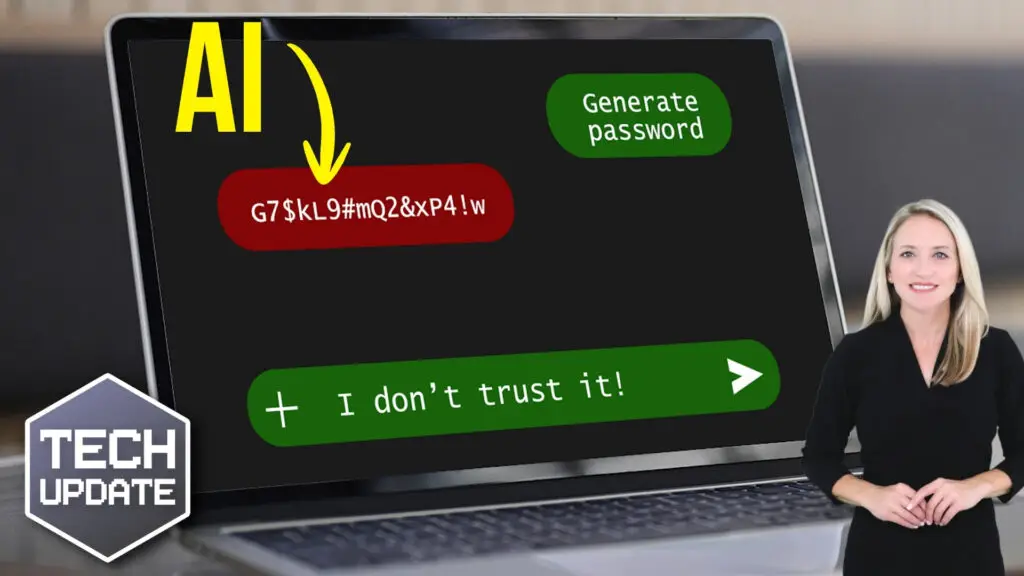
Why AI Password Security Comes with a Hidden Risk
Here is a question worth thinking about. If you needed a strong password right now, would you ask ChatGPT or Copilot to make one for you? A lot of business owners would say yes. After all, AI handles reports, drafts emails, and writes code. Generating a random string of characters feels easy. But AI password security is not as solid as it looks, and that gap can quietly put your business at risk.
Researchers tested several AI tools by asking them to generate secure passwords. On the surface, the results looked impressive. Long strings with mixed letters, numbers, and symbols. Password strength checkers gave them high scores. Some even said it would take centuries to crack them.
When those passwords were analyzed at a deeper level, the story changed.
AI systems are built to predict text, not create true randomness. That is a fundamental difference. When researchers dug into the results, they found repeated patterns, near-duplicate passwords, and structures that followed the same learned rules every time. None of the AI passwords had repeating characters, which sounds good but actually points to a problem. Real randomness includes repetition. The fact that none appeared suggests the AI was following patterns it had learned, not generating unpredictable output.
What This Means for Your Business
Password strength tools only measure visible complexity. They see symbols and uppercase letters and give a green light. They do not detect the hidden patterns baked into AI-generated strings. That means a password can look strong and still be far easier to crack than it should be.
The technical term for this is entropy, meaning how unpredictable a password truly is. AI-generated passwords scored significantly lower on this measure than a genuinely random 16-character password. That makes them more vulnerable to brute-force attacks, where automated tools try millions of combinations rapidly.
Even newer AI models like Gemini 3 Pro have flagged this risk and warned users not to use chat-generated passwords for sensitive accounts. That is worth taking seriously.
The right move is to use a dedicated password manager with a built-in generator. These tools rely on cryptographic randomness, which is a math-based process specifically designed to produce unpredictable results. AI is a great productivity tool for your team; it is just not the right one for this job.
If you want help picking the right password manager for your business, reach out to the Amicus IT team. We work with local businesses every day and can point you toward a solution that actually fits.